Saudi e-invoicing requirements govern how applicable taxpayers generate, store and, depending on their implementation requirements, report or clear electronic invoices. Requirements differ by invoice type, taxpayer status and implementation phase.
Explore the electronic invoice generation and integration requirements introduced through the two phases of ZATCA e-invoicing.

Phase 1 introduced electronic generation and storage requirements for applicable invoices and related notes. Businesses should use compliant electronic solutions and maintain the required invoice information.
Phase 2 introduces integration with ZATCA systems in implementation waves. Requirements can include onboarding, invoice format, security controls, reporting or clearance processes depending on invoice type and taxpayer status.

Manage the key sales documents used before, during and after invoicing with structured workflows designed to keep every transaction organized and connected.
Create professional tax invoices with customer details, VAT calculations and complete transaction records.
Generate simplified tax invoices for eligible retail transactions while maintaining structured records.
Prepare quotation-based proforma invoices before confirming customer orders and final billing.
Record approved invoice reductions, product returns and adjustments while preserving transaction history.
Create debit notes to record additional charges and invoice adjustments with complete audit records.
Connect delivery notes with invoices and customer payments to maintain a complete sales transaction workflow.
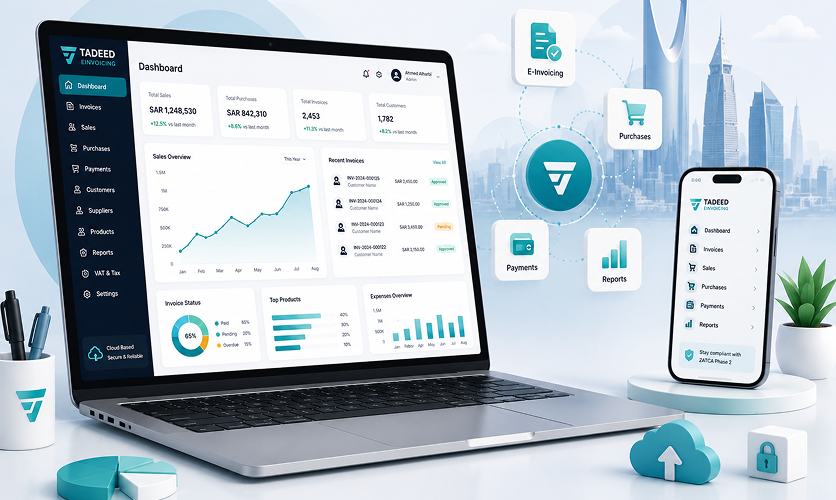
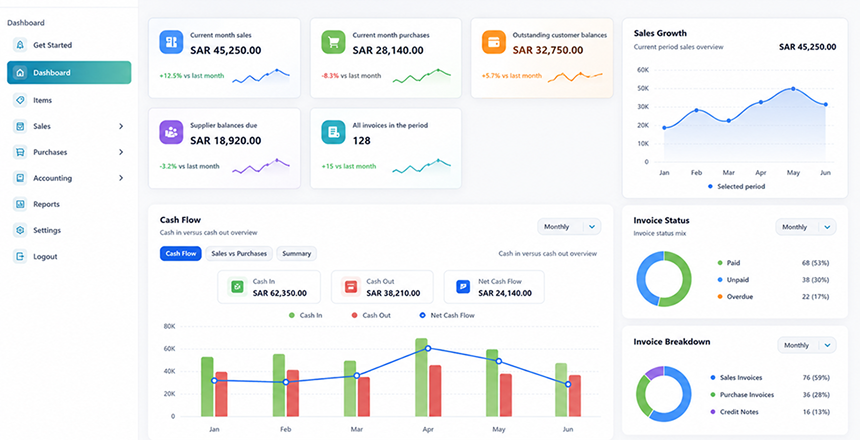
Tadeed eInvoicing provides invoice creation, QR-code and structured-record capabilities, validation stages, status tracking, credit and debit notes, and ZATCA-related workflow support. Exact production capabilities must be confirmed for each release.
Create electronic invoices with the required customer, item, tax and transaction information.
Generate QR-code information for applicable electronic invoice documents.
Maintain invoice information in organized and structured electronic records.
Validate required invoice information before advancing through the workflow.
Follow each invoice through its defined processing and transaction stages.
Create and maintain credit notes connected to the related invoice records.
Prepare debit notes while keeping the associated invoice information connected.
Support ZATCA-related invoice processing based on the capabilities available in each release.
The following is a practical starting point, not legal or tax advice.


ZATCA specifications and implementation requirements may change. Businesses should confirm their obligations using current official guidance and qualified professional advice. Tadeed should review this page before every regulatory update.
Tell us about your business, invoice types and ZATCA onboarding status so we can explain the relevant product workflow.